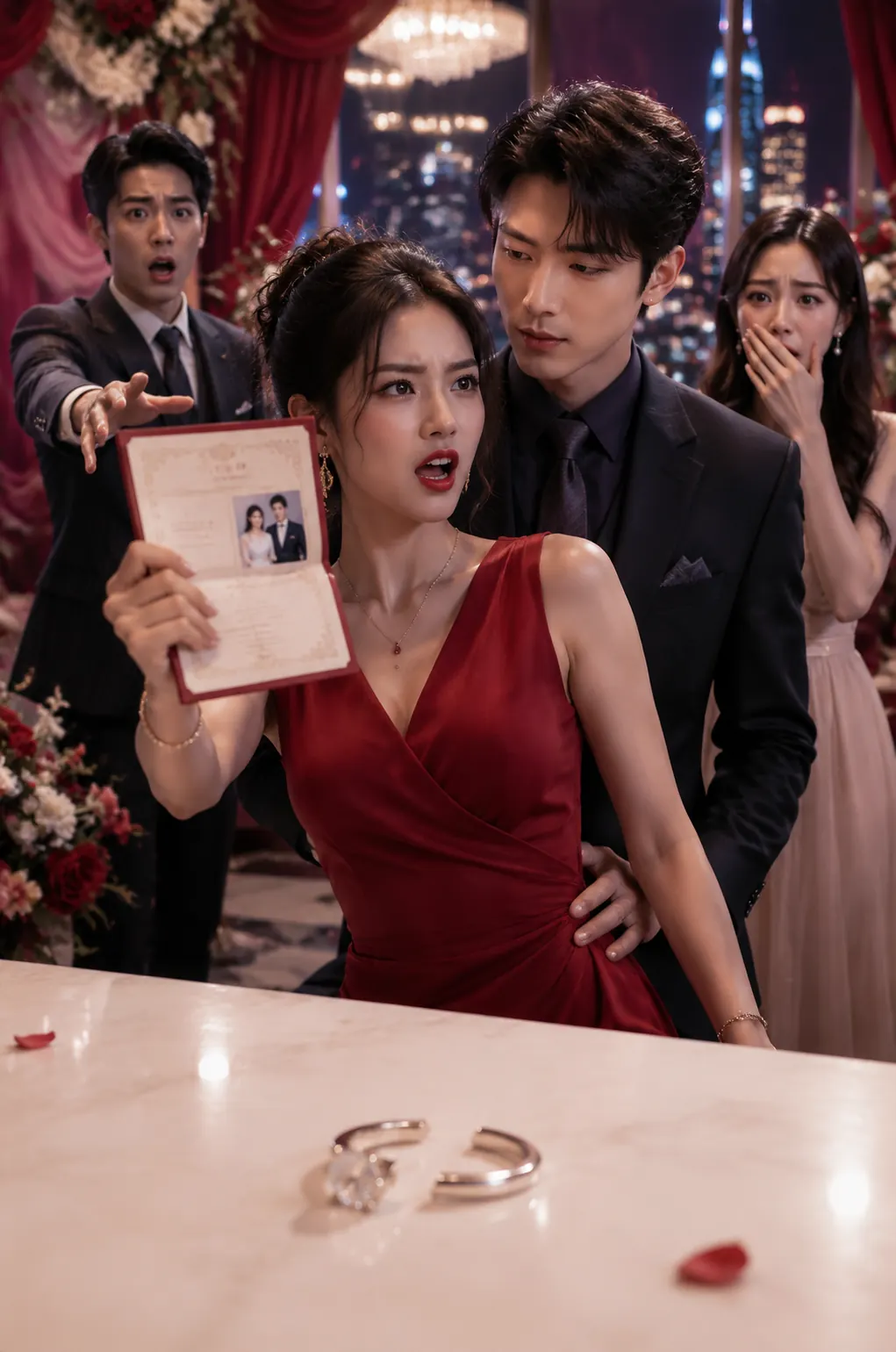

Chapter 23
Chapter 23: What She Did
Kael was standing by the garden wall when she found him, looking at the winter-dead wisteria with the patient attention he gave to everything that was new to him. He turned when she stepped outside, before she spoke. He always turned before she spoke.
"You told them it was registered," he said.
"It's submitted."
"That is not the same thing."
"No." She sat on the garden bench, which was cold through her coat. "But it functions the same way for seventy-two hours."
He was quiet for a moment. The quality of his stillness was not his ordinary stillness — not the stillness of patience or attention or thinking, but something older, like the stillness of a person who has been told something they did not expect and is finding the shape of it. He had heard everything, she was sure of that. His hearing in the palazzo had proven accurate at considerable distance. He had also read her email to Fenya — she had seen him at the laptop an hour earlier, the particular way he went still when he encountered something that surprised him.
"You sent the documentation," he said.
"As a dead-man's switch." She looked at the dead wisteria. The canes were bare and intricate against the pale stone of the wall, like a diagram of something. "If Fenya publishes those pictograms, they're in the academic record. Varen loses the ability to claim the fresco is unknown. Any intervention becomes verifiable and attributable."
"And if the Ministry doesn't confirm the registration."
"Then I submit a supplementary filing." She paused. "And start calling contacts at the Soprintendenza. There are two I can reach directly."
He crossed the garden and sat on the other end of the bench. He did not sit the way humans sat — there was still something too deliberate about how he placed himself in space, the body remaining a considered tool rather than a habitual vehicle. She had grown accustomed to this, the same way she had grown accustomed to all his particular qualities: by observation and gradual revision of expectation.
"I would have found another way," he said.
"There wasn't another way."
"You don't know that."
"No." She looked at him. "I knew it was mine to do."
He said nothing. The garden was cold and the wisteria was bare and somewhere behind them the palazzo was making the small sounds of its ordinary morning — Raffaele in the kitchen, the distant preparation — and she was sitting beside the last living member of a destroyed civilization who was telling her he would have found another way, and she was not arguing the point.
"It wasn't only for you," she said. "The fresco is—" She stopped. This was a harder sentence than the practical one. "It needs to exist. The pictograms, the history of the Court, Isolde's record of what she did. She died to preserve this." She looked at the wisteria canes, the dead winter tangle of them. "It should be in the academic record because it belongs there. Because what she did deserves to be known."
He looked at her with the expression that had no clean contemporary name — not gratitude, nothing she could have filed under any of the available categories. It was the look of someone who had spent four centuries alone and was still learning that some things did not need to be traded for, that some things were simply given.
She had not known she was going to say that. She had not known it was true until she said it aloud, and it had the quality that true things sometimes had: of being recognizable, not surprising — she had known it for some time without the language to reach it.
After a moment, he said: "The Ministry will confirm it."
"You don't know that."
"I know what things hold." He looked at the garden wall, then at her. "What you made this morning holds."
They sat while the morning went on around them. She thought about the translation in her notebook upstairs, the river stone on the windowsill of the archive — smooth, gray-green, still sitting there where he had placed it. She thought about the fear she knew she would sacrifice, which had a very specific shape and had been with her longer than she could remember clearly.
She thought about it without saying it.
Raffaele appeared at the kitchen door and called that lunch was ready.
She stood. Turned. Kael was standing behind her — she hadn't heard him move, which still happened sometimes when she was occupied — close enough that turning had brought her face to face with him at a distance that was technically the garden, functionally different.
"Thank you," he said, "is not what I mean."
"I know," she said.
She went inside. He followed.
In the archive, later — after lunch, after Edoardo had retreated to his study with his own private relief contained and dignified, after Raffaele had cleared the table — she sorted the documents back into their proper boxes. He stood in the doorway in the way he stood in doorways: fully present, not leaning, watching. His attention had a particular quality when she worked. She had catalogued it without meaning to: it was different from the attention he gave the canal, or the light switch, or the questions he asked about the world. With her it was continuous. It did not check whether she had noticed it.
She set a box on the shelf. She had been thinking about what she would say to him and finding that the thinking was unnecessary — that the something she wanted to say was less a sentence and more a state of having arrived somewhere, and that the arrival had already happened. The fear was still there, specific and known, but it was sitting differently now. She had taken the bluff out of her professional toolkit and discovered it was not a bluff but a decision, and decisions had a different weight.
She set a second box on its shelf and straightened.
"The Ministry will confirm the registration in 48 hours," she said, without turning around.
"And if they don't?"
"Then we have 48 hours to find another plan." She set the last box on its shelf. She heard him cross the room — the sound of his footsteps on the flagstone floor, quiet and deliberate, the specific interval between them that she had catalogued without meaning to catalog.
He stopped behind her.
She did not turn around yet.
You might also like