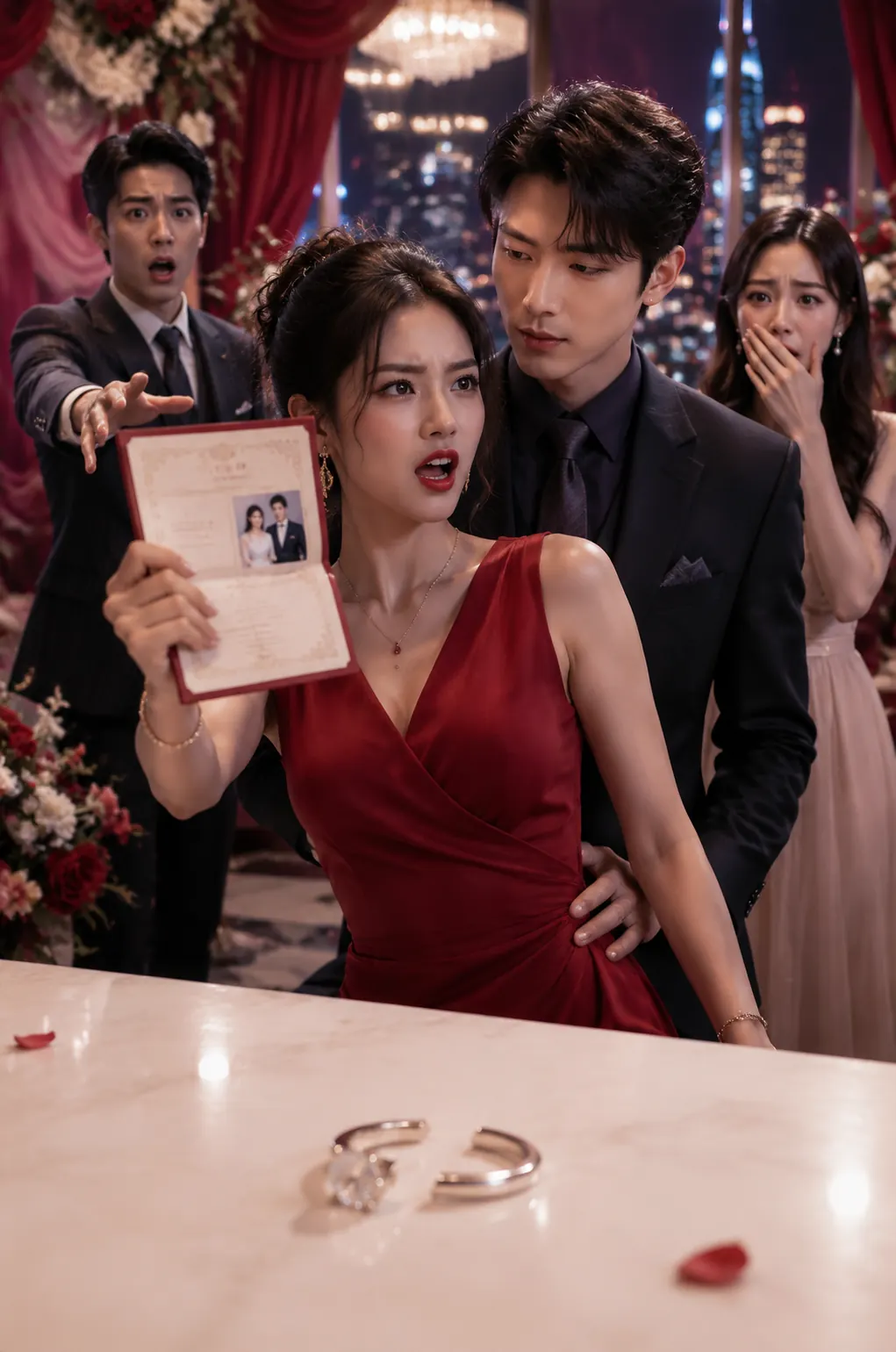


The Infernal Clause
Chapter 1
Chapter 1: The Sublease Problem
Chapter 1: The Sublease Problem
The man at my kitchen table looked up from Williston on Contracts—my copy, borrowed without permission—and smiled like we'd made an appointment.
I didn't scream. I stood in the doorway between the living room and kitchen and did what I do best: I cataloged.
Black suit, midnight cut, no wrinkles. Black hair with what might have been a red sheen where the morning light caught it, or might have been a trick of the light through my shitty kitchen window. Amber eyes. Strong hands, the kind you notice because they're still despite the circumstance. He was tall—I'd need to see him standing, but probably six foot two, maybe six three. Late thirties. Physically. And he was currently dog-earing my contract law book.
"That," I said, "is a first edition Williston."
He looked down at his hand, marked the page with thumb and forefinger, closed the book, and set it on the table. "Apologies. I found myself referencing the section on consideration. Your annotation, at page eighty-four, is quite sound. Most attorneys make the error of assuming consideration must be tangible."
"How did you get into my apartment?"
"Through the front door."
I processed that. "The door was locked."
"Yes."
He spoke as though the lock's irrelevance was a detail I'd eventually accept. He gestured to the chair across from him—my chair, at my table, in my kitchen—and waited.
I didn't sit. I had not had coffee yet. Operating at a deficit before caffeine was already a structural problem, and I hadn't yet identified his category. Burglar seemed unlikely: Williston annotations, formal diction, the patience of a man with several hours free. Stalker was possible but suggested a different motivation set. Crazy was always available as a catch-all.
"Your name," he said, "is Mara Solano. You are a contract attorney. You have been renting this apartment for three years. Yesterday evening, at approximately six o'clock, you signed sublease documentation, transferring the unit from the ownership of the Hartwell Estate to yourself. Correct?"
I held the doorframe. "How do you know that?"
"Because I am present pursuant to an Infernal Clause embedded in the property deed. A binding established one hundred and fifty-four years ago, designating this location as my legitimate domicile in the mortal realm. I have been waiting for the clause to activate. Yesterday, it did."
I studied him for a full five seconds. He sat very still. He did not blink in that particular way that suggests someone is lying, or high, or both. He looked like a man making a statement of fact about the weather.
"You need to show me the deed," I said.
He reached into the jacket of his suit and withdrew a folder, manila, aged, bound with twine. He set it on the table between us, on top of Williston. "As you wish."
I sat. I did not open the folder yet. I looked at him instead, this thing claiming to be bound to my apartment by legal contract. Supernatural contract. A category I did not have a box for before Wednesday morning.
"Kael," he said. "That is my name. I am not here to harm you, nor to take from you, nor to violate the terms of your tenancy. I am here to occupy the space to which I have a legitimate legal claim. I am prepared to discuss the specifics at length, but I suspect you will find the documentation self-explanatory."
Okay. Crazy, but prepared. Crazy with legal documentation. The worst kind of crazy.
I untied the folder.
The deed was old—1872, the date jumped out at me first, written in faded ink by someone who used actual penmanship. The parchment was real parchment, edges worn and soft where they'd been folded and unfolded, text dense and baroque in the way of nineteenth-century legal documents. The English portion was written in that particular over-precised legal script, each letter like a small formal commitment.
I read the opening line:
"That whereas, by legal authority vested in the undersigned and by the conditions of the Binding Clause Infernal, the property described herein as the dwelling known as 15 Ashcroft Place, Unit 3, being that location in perpetuity designated as sanctuary to the party of the First Agreement, shall be maintained as—"
I stopped reading the English and looked at the rest.
The rest was not English—not Latin-based, not Greek, not any alphabet I had a framework for. There were symbols I half-recognized from law school, from contracts written in jurisdictions with older bones—old Flemish notation, archaic property markers from the Low Countries. But threaded through those were characters that went further than that. They were elegant. Whoever had written them had cared about the work.
I looked up at Kael. He had not moved. He watched me with the patience of someone who had had this conversation before, or who had all the time in the world, which given the context might be the same thing.
"Tell me about the structure," I said. "Start from the beginning."
"The first clause establishes the nature of the agreement," Kael said. "It specifies that the property—15 Ashcroft Place, Unit 3, which is the building in which you now stand—was designated as sanctuary prior to your nation's legal framework for property rights. The establishment of the clause required multiple parties. A surveyor. A notary. Myself. The agreement was formalized in 1871 and inscribed in the deed in 1872, at which point the property was transferred from the surveyor's possession to a trust. That trust remained inviolate for one hundred and fifty-four years."
"That is not how property law works," I said. But I was already reading the second page, tracking the notation, trying to separate the English portions from the impossible symbols. "Property rights don't persist unchanged across centuries. There are tax implications. Death duties. Probate requirements. Trusts have to renew. Nothing stays inviolate for a hundred and fifty-four years."
"No," Kael said. "Nothing does. Except this."
I flipped back to the first page and read those opening lines again, carefully this time, treating them like I treated every contract I pulled from a file: as a machine with specific moving parts that either functioned or didn't.
"That whereas, by legal authority vested in the undersigned and by the conditions of the Binding Clause Infernal, the property described herein as the dwelling known as 15 Ashcroft Place, Unit 3, being that location in perpetuity designated as sanctuary to the party of the First Agreement, shall be maintained as—"
I read it a third time. Then a fourth.
And I saw it.
I saw the clause structure. The tightness of it. The way each conditional was nested inside the previous one, each definition reinforced by the one before it, each term bounded and circumscribed and locked in place. The way the entire sentence was technically incomplete—it trailed off into that incomprehensible script—but the English portion had already established the foundation so completely that whatever came after had nowhere else to go. This was not a prank. This was not something someone had fabricated in a fevered night. This was legal architecture. Real architecture. The kind that held.
Someone had bound this into property law one hundred and fifty-four years ago and made it stick.
You might also like