
Chapter 7
Chapter Seven: The Point
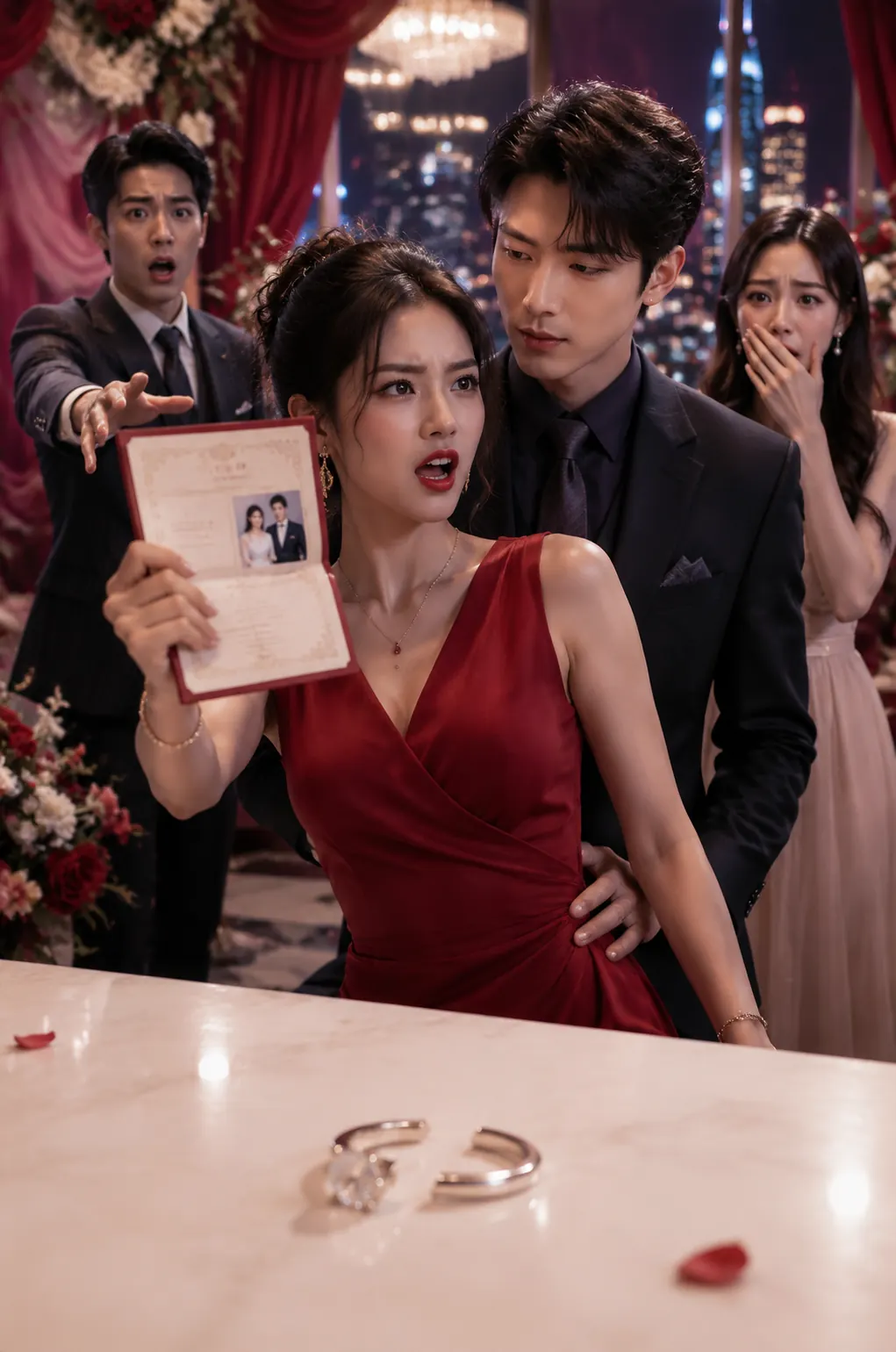
She had not decided to go to his office. That was what she told herself in the elevator — a technicality she held like a shield while the numbers climbed. She had run out of alternate explanations, and the only remaining destination was the forty-ninth floor.
The document had been in her peripheral vision all afternoon. Her name. Her full name, rendered in Ferrara Group's internal font, in an internal memo, dated thirty-eight months before the federal cooperation agreement that had nominally placed her here. The signature block at the bottom had been redacted — or rather, she suspected now that a redaction was what it resembled, since the blankness was too neat, too consistent with the surrounding formatting, the kind of careful absence that implied someone had known what they were leaving. She had stared at it for forty minutes and made no calls and told no one and arrived, logically, at the only remaining question: whether he would deny it to her face.
The forty-ninth floor was darker than the forty-seventh at this hour. The ambient lighting had dropped to the evening setting — warmer, lower, meant to signal that the building's working day was technically over, though Ferrara Group's forty-ninth floor appeared to have made no concessions to this signal. A single assistant remained at the outer desk, already rising as Cara came off the elevator.
"I don't have an appointment," Cara said. "Tell him I'm here."
The assistant looked at her for one half-second of assessment, made a decision Cara could not read, and picked up the phone.
He took her immediately.
His office was different after hours. In the one prior meeting she'd had in this room — scheduled, structured, attended by Lorenzo and two department heads — the light had come from the west windows at full height, and the scale of the room had felt calibrated for authority. For multiple people observing a power differential. Now his blinds were drawn. The room was lit from within. The scale remained, but the quality of it had shifted into something less public, and she registered this with the part of her brain that catalogued environmental variables, and set it aside.
Marco Ferrara was standing when she came in. He didn't cross to her, didn't gesture to a chair. He stood behind his desk and looked at her, and his expression held the particular calibrated stillness she had come to identify as his default — not closed, exactly, but managed. A face that showed you precisely what it had decided to show you.
"You found something," he said.
She took two steps into the room, far enough to close the door behind her, and stopped. "My name appears in a Ferrara Group internal document. Dated March of three years ago." She kept her voice even, her hands at her sides. "The document concerns audit coordination for the subsidiary we're currently reviewing. I need you to explain how that's possible."
He was quiet for a moment. She had expected several responses — a request for the document, a denial, a performance of surprise. She had prepared herself for all of them. She had not prepared for the way he looked at her across the fifteen feet of dark office as though she had just confirmed something he'd already accounted for, and said nothing.
"Sit down, Cara."
"I'll stand."
He accepted this without reaction. He moved around to the front of his desk — not toward her, just closer to the center of the room — and stood with one hand resting loosely on the desk's edge. The lamp behind him cast his shadow forward. The light caught the angle of his jaw, the line of his collarbone under the open collar he wore in the evenings, the slight imprecision of a man two hours past formal. She noticed this in the same clinical register she noticed everything. She refused to do anything further with the noticing.
"The document exists," he said.
She had known he wouldn't deny it. She had prepared for the possibility that he wouldn't deny it. The preparation did not fully absorb the impact of hearing it confirmed.
She kept her chin level. Her voice came out exactly as she intended — controlled, precise, with an edge she allowed because it was honest. "Then you arranged this. My placement here was not a coordination agreement. It was a selection."
He looked at her with that unhurried regard — the look of a man with something she wanted who had not yet decided the terms. Her pulse had taken a different shape, something she was aware of and actively declined to name.
"I'm not going to ask you to sit down again," he said.
"Then answer the question."
For a moment he didn't. He turned slightly, looking toward the drawn blinds, and she had the sense of someone selecting from several options — not stalling, not deflecting, but choosing the order of things with care. When he looked back at her, his expression had changed by a fraction. The composed stillness was still there, but a layer beneath it had opened. Like attention. The specific kind.
"What would you do," he said, "if you found out the audit was the point?"
The question landed in the room and stayed there.
She held his gaze. Her jaw was tight, her spine straight, everything in her posture organized around the performance of a woman who had not just felt the ground shift under her. "What does that mean?"
He said nothing.
She waited, because she was patient and she had learned to outlast silence in rooms that were not friendly to her. He held it for longer than most people could — long enough that she understood it wasn't going to break, that this was not a silence from discomfort but from intention. He was not going to answer. He was watching what she did with the question instead.
The contempt she felt was clean and real, and she used it. She used it to take the two steps back to the door, to turn the handle with her left hand while she kept her eyes on him, to let him see that she was leaving and that she was choosing to leave and that neither of those facts were evidence of anything.
"We'll continue this tomorrow," she said. Crisp. Final. The tone of a professional ending a professional conversation.
He inclined his head. The smallest acknowledgment. She could not read it.
She left.
The elevator bank was empty at this hour, the corridor just the building breathing at its evening volume — the low vibration of the HVAC, the soft mechanical sound of the doors opening when she pressed the call button. She stepped in. The doors closed behind her.
The numbers descended.
She stood in the elevator's deliberate silence and let the question he'd given her fully arrive. She had held it at arm's length for the last forty seconds — during the exit, down the corridor, through the push of the button — but there was nowhere left to put it. The elevator had no windows. Her own reflection was not particularly useful. The question was all that was in the room with her.
What would you do if you found out the audit was the point?
She turned it over once, twice, the way she turned over documents she didn't yet have full context for — not trying to solve it, just learning its weight, mapping the shape of what it concealed. He hadn't asked what the audit was for. He hadn't asked what she'd do with what she knew. He had asked what she would do if she discovered the purpose she'd been assigned was the instrument — if the investigation itself, her presence, her access, her nine weeks of methodical dismantling — was not the method but the outcome.
She could not answer that.
She was not sure the question had one answer. She was not sure that was accidental.
The elevator stopped. The doors opened onto the lobby. Cool evening air from the revolving door, the city visible through the glass, the ordinary motion of people leaving buildings at ordinary hours.
Cara stood at the threshold for one breath. Then she walked out.
Behind her, the elevator closed.
The question rode home with her.
You might also like