

Chapter 23
Chapter 23: The Ashen King
The Conclave hall had been built for forty men.
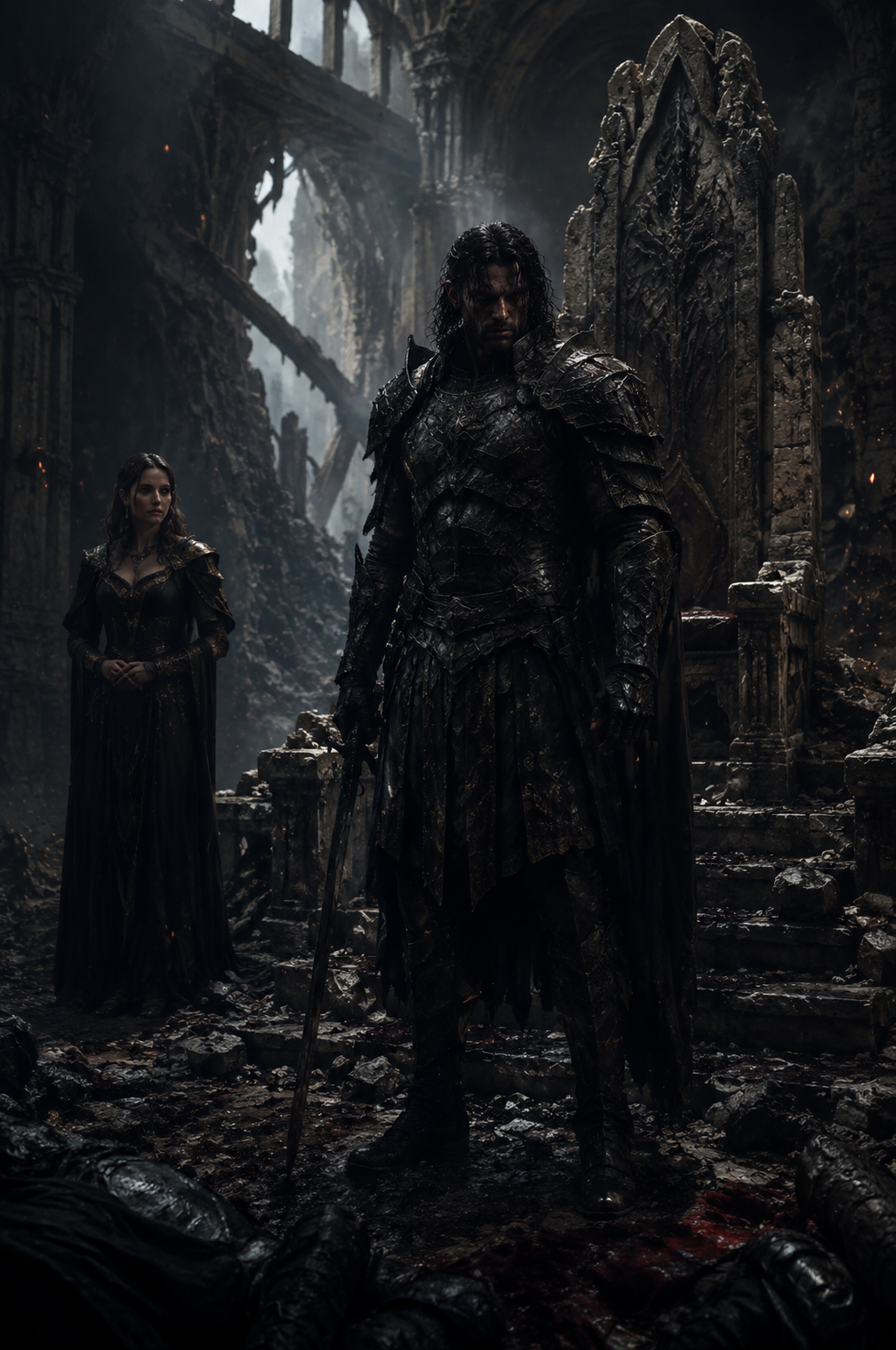
With thirty-seven empty chairs, the sound of his own breathing was audible. He had been sitting in the Praetor's chair for two hours. It was not comfortable. It had not been built for comfort — it had been built to confer a posture: spine upright, hands visible on the armrests, face level with the room.
He was keeping the posture.
The chair was cold. Outside, the city was making its morning sounds. Markets opening. Carts on the cobbles. The particular quality of noise that a city produces when no one in it knows yet that something has changed.
He had sent word to the stewards that morning. The Conclave's chambers were under administrative hold. Thessaly's seal was on the Crown Archive. The mid-ring lords who had signed were, as of yesterday, no longer seated. Vauren had sent his own letter of capitulation from somewhere north of the capital, which arrived in the morning post, which struck Aldric as the appropriate level of dignity for what Vauren had done.
Dahl was in custody. Corvus's rider had confirmed it at dawn. He would be processed under the terms he had declined to accept, which meant prosecution. The banking houses would require a separate reckoning. That would take months.
Orvaine was dead. That was not in any letter yet.
The door opened.
Thessaly came in through the side entrance — the scribes' door, a habit from years of moving through this building as a functionary rather than a participant. She was carrying the oilcloth bundle she had carried since the beginning of this. The complete record. Everything she had spent seven years assembling.
She looked at him in the chair. She looked at the empty room around him.
She sat down in one of the ordinary chairs — not a Conclave seat, just a chair someone had placed for a secretary — and set the bundle on her knee.
"The record is complete," she said.
"I know."
"I can release it today. All of it. Every document, every correspondence, the full decision record, the names, the dates, Orvaine's written reasoning from the fourteen months before."
"I know."
She looked at him.
"What comes next?"
He had expected this. Not the specific words — the question had changed in texture since the first time she had asked it, in a different room, with different stakes. But he had known, since the Blackfen, the second time, that she would be the one who asked.
He thought about how to answer it accurately.
"I'll govern," he said. "For as long as that's viable. By the same logic that got me here — the line, the costs, the specific refusal to treat the uninvolved as tools. I'll build the stewardship body. Transfer the judicial authority that the crown was never able to hold cleanly. Establish the financial oversight that Dahl's entire operation depended on being absent." He paused. "One piece at a time. In the right order."
"And when you make a mistake."
"I'll make mistakes. I know what mistakes look like — I've studied four years of them in considerable detail, in other people's work, in my own. Knowing what failure looks like is not the same as preventing it." He kept his hands on the armrests. "It is not nothing."
Thessaly looked at him for a long time.
"You know what I've been doing," she said. "Since the beginning. Since before Harwick."
"Building the case to stop me."
"Yes."
"The record."
"Yes."
He nodded.
"The record is accurate," he said. "Everything in it happened. Release it if you decide that's right. I won't tell you what to do with it."
"You're not going to ask me not to."
"Would it change anything if I did?"
She thought about this.
"No," she said.
"Then I'm not going to ask."
She looked at the bundle in her lap. She looked back at him. The light through the high windows fell across the empty chairs.
"You didn't win," she said. Not unkindly. Precisely.
"No," he said. "Not by any measure that was worth winning by."
She stood. She put the bundle back under her arm.
She left through the side door.
He did not watch her go.
The hall was quiet in the way of rooms where decisions have recently been made: completely, with a particular weight.
He had not slept.
He had a list. He had made lists for four years and the habit did not stop because the war did; it simply found a different column. The stewardship body needed three names by the end of the week. The judiciary commission needed a charter, which needed language that was not Conclave language and not crown language, which was a problem he had been working on for eight months and had not solved. The eastern tariff structures needed dismantling, carefully, in a sequence that did not immediately destroy the mills. The banking houses needed someone who understood banking houses, which meant Aldric needed to find someone who understood banking houses and had not worked for Dahl.
One piece at a time. In the right order.
He sat in the chair and kept his hands on the armrests and let his eyes move across the empty room.
Orvaine was not wrong that the structure was broken. He was wrong that it was Aldric who had broken it; the structure had been breaking since the night the King died, and everything since had been determining what came next. Wrong, also, in the way that the most coherent arguments are wrong: precisely enough at the mechanism to miss the thing the mechanism was protecting. The argument for necessity was always coherent. It was always incomplete.
He knew this. He also knew that he would, at some point, make a decision that looked necessary and was incomplete in the same way, and he would not see it from the inside because no one ever did.
That was not an argument for not making decisions. It was an argument for building systems that survived the decisions of individual men. That was the work. That was what the list was for.
In the quality of the room's silence, something had been present for some time.
He had learned not to try to locate it. It was not in a particular corner or shadow. It was in the room the way a debt lives in a ledger — as a condition, not a position. It had been there through everything: through the planning and the waiting and Harwick and Pellean and Sentus, through the counterattack and the cells and the second time in the Blackfen when he had come back different in the way he had never found the language for.
It did not want anything. He had known this for long enough that he had stopped being unsettled by knowing it, which might itself be a thing to be unsettled by.
It watched because watching was what it did. It had watched the massacre. It had watched him plan this for four years. It had watched Orvaine's face in the last light of his estate, and it would watch whatever came next, with no preference for outcomes and no investment in what any of it meant.
He had done what he came to do.
He did not know if that was winning. He suspected that question had been the wrong question since the beginning, and that the right question was something like: is this better or worse than what it replaced, and that the answer to that question would not be available for some time, and that this was the condition of the work, and that the work was what there was.
He sat in the Praetor's chair in the empty hall.
The city went on outside. The watching continued inside, patient and empty and indifferent to the distinction between the two.
He stayed in the chair, and held very still, and did not look away.
You've finished The Ashen King.