
Chapter 4
Chapter 4: 'You Knew'
The footstep on the iron staircase was the only warning.
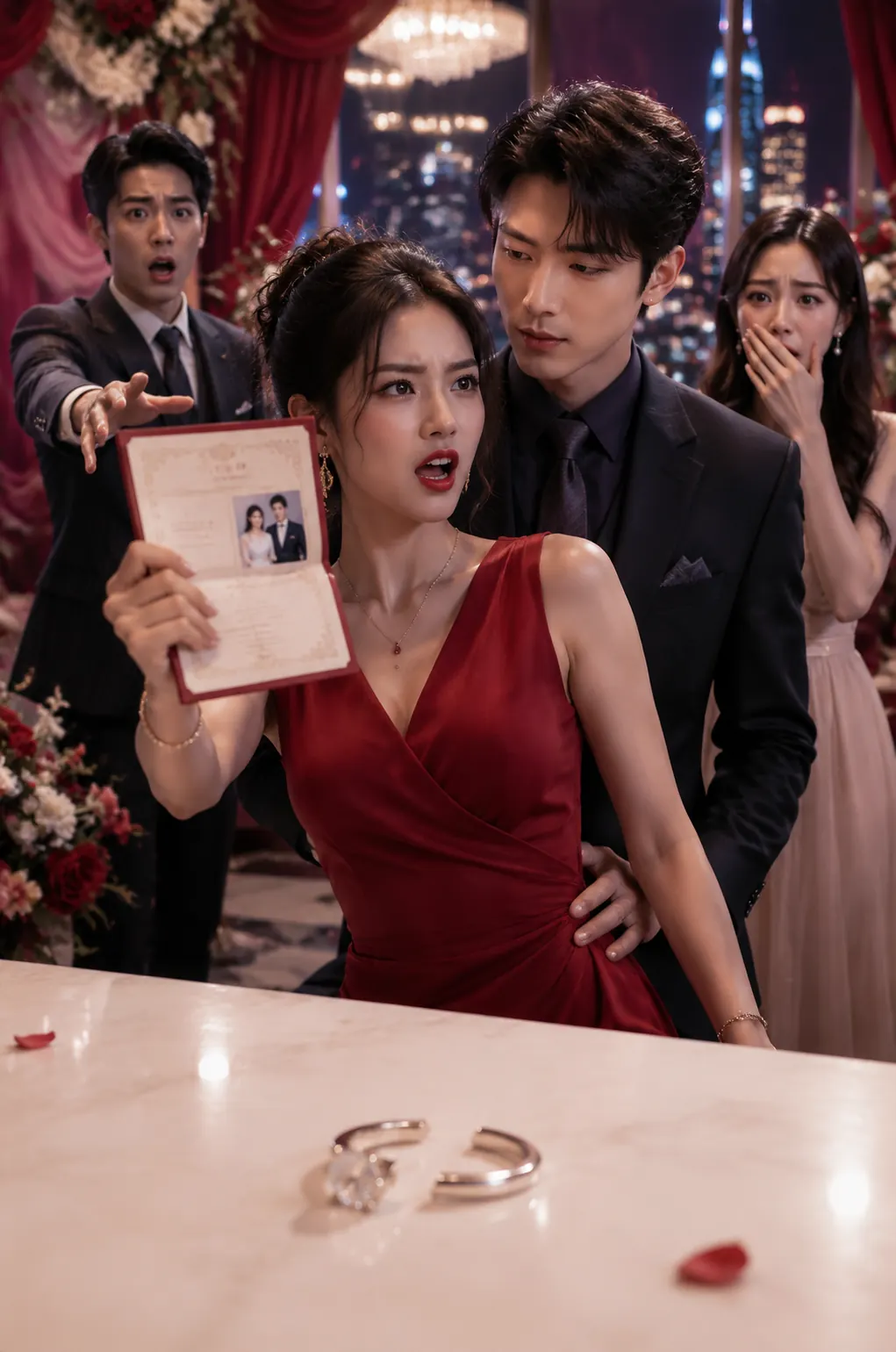
Isolde did not turn around when Ashford reached the library floor. She had arranged herself at the reading table with the legal volume open before her, her hands flat on the desk, her breathing deliberately even. The margin note had revealed itself in the morning light with a clarity that suggested it had been waiting for her to notice it—a year of waiting, perhaps, or twelve years, or some duration that fell outside ordinary time.
She heard him orient himself to the room. The pause before he spoke told her he had registered that she was waiting. That she was not cataloguing. That she held the slim, dark-bound volume as if it were the only thing that mattered.
"You found the 1886 compendium," he said.
No question, no apology, no retreat into explanation. She turned then, letting him see that she had composed herself with the same methodical care she applied to everything.
"Published two years before my husband's death," she said. "The annotation is dated after his death. March 1887. That means you knew he was dead before any announcement could have reached Yorkshire. That means you knew the terms of his will—the clause, the dates, the exact amount of the debt. That means you knew about me before I knew about myself as your problem to solve."
She did not frame it as accusation. She presented it as she would present a discrepancy in a catalogue entry to a senior scholar: facts arranged in sequence, each one supporting the next, the logic inescapable.
Ashford crossed the library toward her without hurrying. He moved through the space with a precision that suggested he had memorized every shelf, every step, every angle of light. When he reached the reading table, he did not sit. He stood on the opposite side of it, looking down at the open page.
"The compendium was already here when your husband died," he said. "I obtained it in 1885. I maintain a correspondence with several solicitors—for information, not legal advice."
"That's not an answer."
"It's a partial one."
She watched him. His face remained contained, but she could see the small movement in his jaw that indicated he was choosing his words with unusual care. Two days ago, she would not have recognized it. Two days of nothing but the margins of books had taught her to read smaller differences.
"You maintain a correspondence for information about what?" she asked.
"About people who come here."
"People who come here voluntarily don't need to be investigated before they arrive."
"No," he agreed. "They don't."
She set her pencil down. The precision of his responses was beginning to irritate her in a way that was not unpleasant—the irritation that came from a mind meeting resistance that made thought necessary rather than optional. "You must have known I wouldn't accept a position without understanding the terms—that I would find the annotation, that I would confront you about it."
"I knew," he said, "that you were the sort of person who would."
"Then why?"
"Because you're also the sort of person who would have discovered it through other means if you hadn't found it this way. And this way, you know where it came from and you know why."
She stood. She had not planned to stand, but the conversation required movement, and she moved, pacing the small space before the reading table with the same methodical steps she used in cataloguing. "Why would you want me to know? If you were concerned about privacy—your privacy—you would have destroyed the annotation. You would have removed the page. You would have done any number of things that would prevent someone like me from reading words you wrote about my private grief."
"I didn't write those words for secrecy."
She stopped. "Then what were they for?"

He turned to face her directly. In the morning light, his eyes were very clear, the grey-blue of old glass. "Continuation. You need to understand something, Miss Crane. The books in this library are annotated across twelve years. Every annotation was written with the assumption that someone would eventually read them. That someone would need the record I've maintained. I maintain the records because I can't leave this house. I maintain them because the knowledge I have would be worthless if it was contained only in my own memory. I annotated the compendium because I knew you would arrive—not as prediction, but as consequence of how these things function."
She began to move again. "What things?"
"The terms of your husband's will."
"The will was settled in court. It's a legal matter, not a supernatural one."
"Is there a distinction in this case?"
"Yes," she said. "One is explained. One is not."
He moved to the shelves and withdrew a volume she recognized—one of the medical texts she had examined that morning. He opened it to a marked page and turned it toward her, and she saw the case notes: a woman, complicated birth, survived. A man, fever of unknown cause, died. "The woman who survived complicated birth in 1878 married one of the groundskeepers. She lived here with him for seven years. She had two children. Then she stopped needing anything this estate could provide, and the terms of her presence changed. She left. The man stayed on three years longer and then disappeared. The medical notes end the day before he disappeared."
"That's not evidence of anything except that he left."
"No," Ashford said. "But it's consistent with how the house functions. With how the bargain functions."
She set down the medical text. "You keep using that word. Bargain. What bargain, specifically?"
"The one I made to live here. The one that allows me to know what I know about people who arrive. The one that has kept me capable of maintaining this library for twelve years without aging beyond the natural progression of time and the specific loss of capacity that comes from not having actual human conversation."
He was stating the terms of a problem as he understood them, without ornament, without appeal for belief.
"And the woman," Isolde said slowly, "The children."
"Were as safe as anyone can be when they're living in a place that extracts payment. She left because she understood what she was paying. Most of them do eventually. Most of them discover that even security has a price they won't pay."
"What price?"
"Time."
She sat back down at the table. Her notebook was there, her pencil, the work she had begun that morning before she discovered the annotation. The cataloguing of a library maintained by someone who had made a bargain with something that allowed him to know things about strangers before they arrived.
"I need to understand," she said, "how you arrived at the conclusion that I specifically needed to know about this. There are a hundred new servants who come and go from this house. Most of them don't discover anything. Most of them probably don't even read the margins."
"No," he agreed. "But most of them aren't widows without resources looking at thirteen more years of carrying a house that carries a lien. Most of them haven't already made a bargain of their own—the sort that doesn't involve anything supernatural, just economics and desperation and the particular architecture of a marriage that was settled as a legal arrangement rather than anything resembling choice."
He was right. She was right to feel it as violation and exposure. He had read her entirely, and not through the margins of books or correspondence with solicitors. He had read her the way he read his library: taking her structure, understanding how it functioned, noting the places where it was under stress.
"How long have you been here?" she asked.
"Twelve years."
"By choice?"
He was quiet for a long moment. Long enough that she understood the answer would cost him something. Long enough that she filed this away as evidence of something not yet named.
"By necessity," he said finally. "Which is not the same thing, though it functions similarly. I made the bargain because I had reached a point where continuing to exist in the world was no longer viable, and this house offered an alternative. I stay because the terms of the bargain are specific and absolute. I don't stay by choice because choice ceased to be applicable twelve years ago. But I remain here. I maintain the library. I read. I write annotations. I wait."
You might also like